

Now Reading: Arakan Army accused of systematic abuse against Rohingya Muslims in Myanmar
-
01
Arakan Army accused of systematic abuse against Rohingya Muslims in Myanmar
Arakan Army accused of systematic abuse against Rohingya Muslims in Myanmar
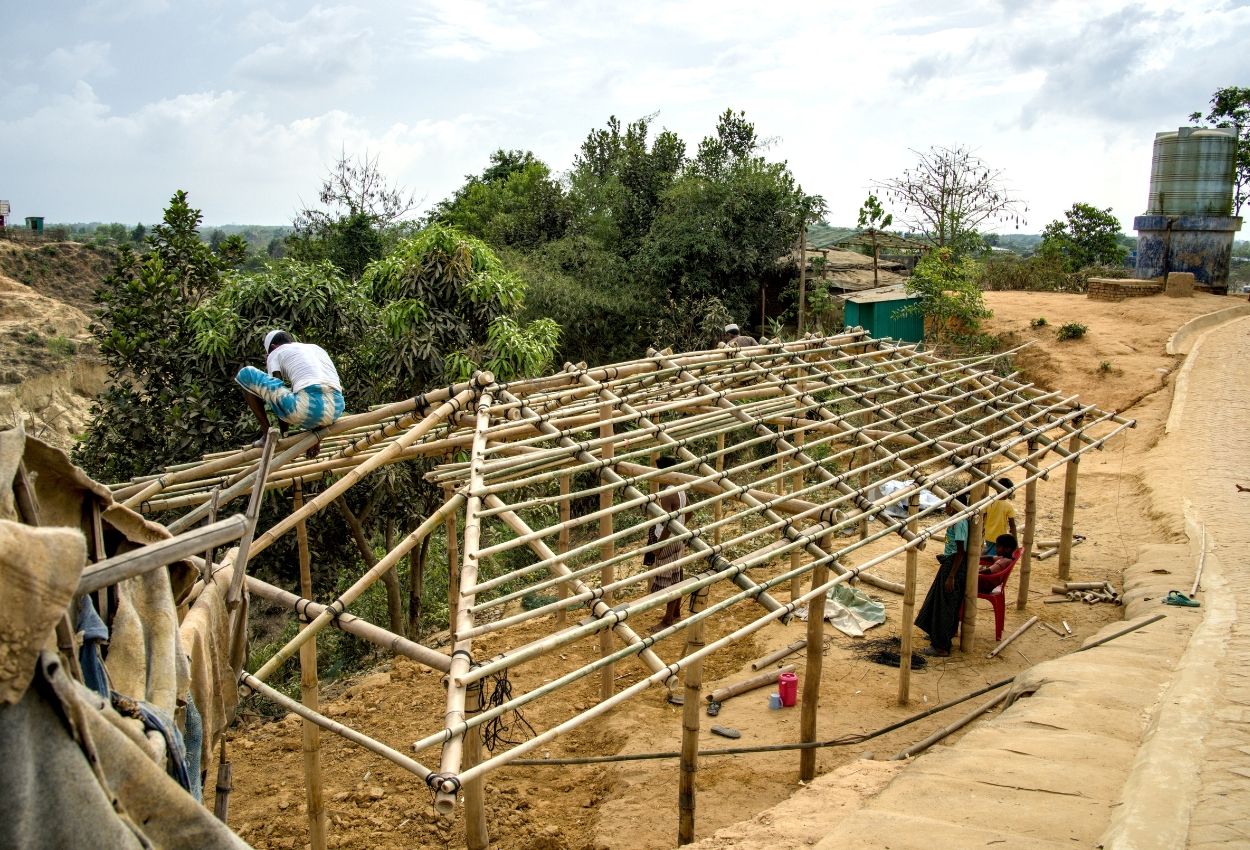
In Myanmar’s volatile Rakhine State, a new report by Human Rights Watch (HRW) alleges that the Arakan Army (AA), an ethnic armed group, is carrying out systematic and severe abuses against the Rohingya Muslim minority—drawing disturbing parallels to long-standing atrocities committed by the country’s military.
HRW accuses the Arakan Army of imposing sweeping movement restrictions, confiscating property, and forcing civilians into unpaid labor and military service. These abuses accompany the group’s expanding territorial control in Rakhine, which intensified after hostilities with the ruling military junta resumed in November 2023.
“The Arakan Army is carrying out policies of oppression against the Rohingya similar to those long imposed by the Myanmar military in Rakhine State,” said Elaine Pearson, Asia director at Human Rights Watch. “The Arakan Army should end its discriminatory and abusive practices and comply with international law.”
Twelve Rohingya refugees interviewed by HRW between April and July 2025 painted a grim picture of daily life under AA rule in Buthidaung township. Civilians described curfews, restricted travel, and food insecurity so dire that begging became the primary means of survival.
“We were not allowed to work, fish, farm, or even move without permission,” said a 62-year-old refugee who arrived in Bangladesh in June. “Most people were begging from one another.”
The Arakan Army had earlier pledged inclusive governance after displacing Myanmar’s military from parts of Rakhine. However, refugees say discriminatory regulations implemented by the AA and its political arm, the United League of Arakan, have made conditions intolerable.
Residents in Buthidaung reported that travel permits valid for just one day cost between 3,000 and 5,000 kyat (approximately US$1.40–$2.40), and required approval from both local Muslim administrators and the AA. A 62-year-old man said villagers faced arrest if caught outside during curfew hours. “Their whereabouts would become unknown,” he said.
Basic survival was further compromised as the AA seized farmland, homes, livestock, and even cemeteries. In one reported instance, two men said AA fighters destroyed their local graveyard in May and ordered them to use rice paddies for burials.
Human Rights Watch says the conflict has displaced over 400,000 people in Rakhine and Chin states since late 2023, with some 200,000 fleeing to Bangladesh. More than 120,000 new arrivals have been officially registered in refugee camps in Bangladesh since May 2024, while tens of thousands remain unregistered and without formal aid.
The Rohingya are increasingly caught between the Myanmar military and the Arakan Army, both of whom stand accused of extrajudicial killings, arson, and forced recruitment. Tensions have escalated further as Rohingya armed groups, including the Arakan Rohingya Salvation Army (ARSA), resume clashes with the AA—after briefly siding with the military in 2024.
Rohingya families say the AA is forcibly recruiting youth, including minors. One father fled with his family in June after hiding his 17-year-old son for two months. “They tried to force him to join. When they couldn’t find him, they burned our house,” he said. Another man said he was detained for 35 days and beaten after refusing to hand over his son.
The Arakan Army has also targeted those it suspects of collaborating with ARSA or the military. A 35-year-old man said he was detained in Buthidaung in December 2024, accused of receiving military training. “They beat me with bamboo sticks. I still have trouble walking,” he said.
A 19-year-old said he was forced into five months of unpaid labor by the AA after being abducted from his village. He alleged that Rohingya workers were used as “human shields” at the front line and regularly beaten. “When we asked for equal treatment, they mocked us and used racial slurs,” he said.
Under international humanitarian law, including Common Article 3 of the 1949 Geneva Conventions, such acts—including torture, forced labor, child recruitment, and pillaging—are prohibited.
HRW also noted the role of smuggling networks in enabling Rohingya to escape to Bangladesh. Refugees said they paid between 800,000 and 1.25 million kyat (US$380–$595) per person for the journey.
Despite the worsening crisis, Bangladesh continues to assert that repatriation is the only long-term solution. However, the United Nations and rights groups argue that conditions in Myanmar remain unsafe for any return.
“Donors and influential governments need to do much more to protect the Rohingya people, including their right to safety and freedom, whether in Myanmar or Bangladesh,” said Pearson. “They should also press the Arakan Army to respect the rights of all communities in Rakhine State.”
This is the edited version of the report that was first published by Human Rights Watch on